


Space exploration and mining have more in common than most people realise.
I wasn’t alive to witness the Apollo 11 landing, but like many others, I’ve watched hours of the Artemis program in awe. After more than 50 years, humans returned to our celestial dance partner — if only to wave.
That long hiatus mattered.
Technology had evolved. The engineers and scientists who powered Apollo had retired—or passed away. Institutional memory faded. The world changed. Entire systems had to be redesigned from scratch. The result? Massive delays, ballooning timelines, and a sobering reminder of how difficult it is to restart something once time stretches too far.
And that’s where the parallel with mining becomes impossible to ignore.
Time.
At IMARC not long ago, I was part of a panel discussing the main challenges facing mining investment. I had prepared to talk about familiar issues—permitting, regulation, social licence. But as the discussion unfolded, it became clear that a more fundamental issue sat underneath everything else.
A duration mismatch.
Mining projects routinely take many years —often decades— to move from discovery to production, while most investors operate on far shorter horizons. Public markets, in particular, are conditioned to expect results within quarters, not generations.
According to S&P Global, the average global timeline from discovery to production now exceeds 16 years, stretching even longer for large deposits and certain jurisdictions. That is simply too long for most pools of capital.
We don’t have to look far for examples.
Take the Serra Verde REE deal in Brazil. A success story by every measure. PE Denham posted that they discovered the deposit 15 years ago, while commercial production started just in 2024.
Or Los Azules in Argentina—part of my own professional journey. Initial work there began more than two decades ago. We’ve held McEwen for roughly half that time. Feasibility studies were completed last year, and if everything aligns, production could begin around 2029.
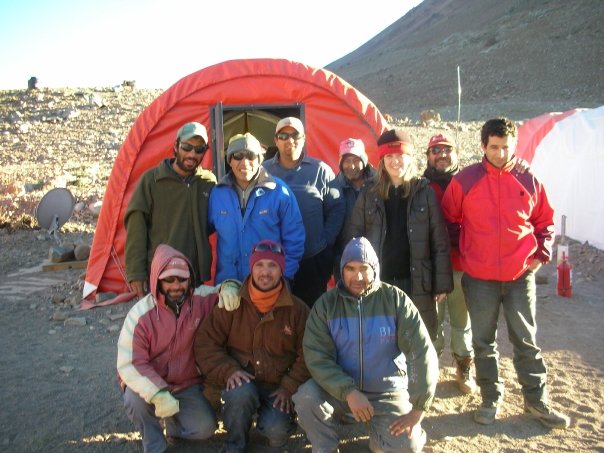
Between the starting line and the finish line of a mining project, governments change, policy frameworks shift, commodity cycles rise and fall—and people retire, or die.
To fully realise the inherent value of these assets requires exceptionally patient capital. And patience, today, is a scarce resource.
Sector‑specialist investors understand this reality, and some are willing to underwrite it. But they are few — far too few to support the level of supply growth implied by global energy transition forecasts.
Generalist investors may be increasingly interested in mining, but they bring shorter time horizons and different expectations.
So where does that leave us?
Asking investors to wait 15 or 20 years to realise value is not realistic. If mining wants broader capital support, cycle times must shrink and returns must become more visible, sooner.
There are several paths emerging:
- Reducing exploration risk by applying AI, machine learning, and advanced data analytics to discovery. Improving targeting efficiency is one of the few levers we can realistically pull early in the value chain.
- Strengthening the mid‑tier, backing smaller operators that can reach cash flow faster, like Sierra Madre or Fortuna Silver
- Expanding thematic capital pools, including ETFs and funds that allocate across the mining spectrum—explorers, developers, and producers—as part of broader transition or materials strategies, such as LIT
Within the industry, we like to say “grade is king.”
Outside it, the real king is something far more immediate.
Cash flow.
And unless mining finds ways to compress time, capital will keep gravitating to sectors where value is realised not in decades—but in years.
If you enjoyed this analysis, subscribe to our distribution list to receive it via email.
And that’s it for today.
PS: You’ll find extra resources below. Become a member to access 80+ exclusive posts.

If you enjoyed this…
- Invest more confidently with Mining Investing 101
- Become a member for weekly opportunity alerts and access to the whole vault

Disclaimer: Opinions and materials presented are not investment or financial advice and are intended for informational and educational purposes only; please consult a financial advisor before investing. Companies mentioned publicly may be held and/or clients, except within the member section. Content might contain affiliate links. By reading or sharing, you agree to our full disclaimer.
Investor, corporate? Join Synergy Resource Capital’s distribution list for our newsletter and updates.
Sources: Canaccord research, Bloomberg, Reuters, Mining.com, TradingView, ASX, TMX, NASDAQ, LSE and SRC research. Figures shown in US dollars unless clarified.
 Mining Investing Toolkit